
Dry, low-rain climate
With half the normal monsoon in 2026 and long dry months, panels go uncleaned by rain for most of the year.
Jamnagar makes most of India’s brass components, in estates where water comes from tube wells. Keep rooftop solar earning there without spending that water on washing panels.
Jamnagar is known as the Brass City. Its units make an estimated 80% of India’s brass components for electrical fittings, cars and sanitaryware. The district is also home to the Reliance refinery complex, described as the largest refining hub in the world, and to a big salt industry.
Brass-parts units work with turning machines, furnaces and plating lines, and their power bills are a large cost. Rooftop solar on their sheds cuts that, but only while the panels stay clean.
Water is the constraint. Jamnagar has no perennial rivers, and its GIDC estates rely on tube wells. The 2026 monsoon came in at half the normal rainfall, so washing panels with water is hard to justify.
Factories, warehouses and plants with rooftop solar in these estates and corridors.
With half the normal monsoon in 2026 and long dry months, panels go uncleaned by rain for most of the year.
Turning, casting and polishing brass parts releases fine particles that settle on shed roofs.
Estates that pump their water from tube wells cannot spare it for washing glass.
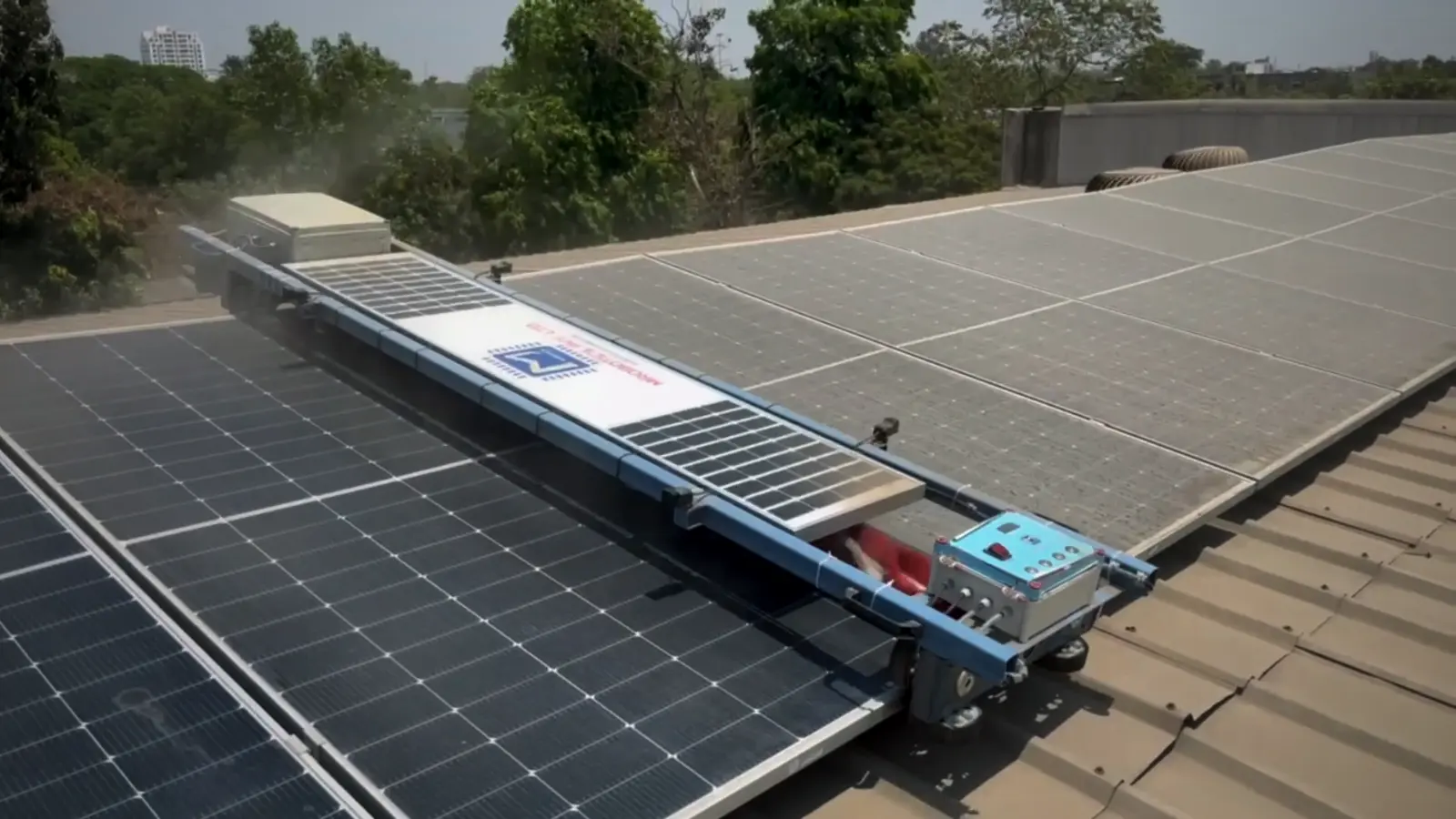
Large factory sheds and warehouses with long, continuous panel rows suit Solar Glide. The robot travels along the row with a dry rotating brush, charges itself from its own solar panel and runs on a schedule, so nobody has to walk the roof.
Roofs with several smaller arrays, skylights, vents or mixed orientations suit Aqualess Industrial: a 600 mm motorised brush on a 3.3 m rod that one person guides from a safe position.
Both clean dry. With estates running on tube wells, that water stays for production.
Our team travels from Vadodara (~380 km) to survey your roof, demonstrate the cleaner on your own panels and set it up. Support continues after handover.
Yes. We supply Solar Glide robots and Aqualess waterless cleaners to units across Jamnagar’s GIDC estates and industrial areas, and we visit for a roof survey, demo, setup and support.
Smaller or broken arrays, typical of brass-parts units, usually suit Aqualess Industrial, which one person guides with a 3.3 m rod. Long continuous rows suit Solar Glide. We will recommend one after seeing your roof.
We are based in Makarpura GIDC, Vadodara, about 380 km away by road. We travel across Gujarat for roof surveys, demos, setup and support. Call or message us to book a visit.
A wet clean typically uses 3–5 litres per panel each time, according to CEEW. Our savings calculator shows the yearly figure for your panel count.
Running rooftop solar in Jamnagar? Book a site visit and see a waterless clean on your own panels.
Book a site visit →